
When the community takes control of mental health.
Have you ever felt that the solutions to your neighborhood's problems always come "from the top down", without considering what you actually experience?
In traditional science, this happens a lot: researchers enter the community, collect data, and leave to write articles that residents will never read. But what if research was a tool for redistributing power?
The Global South and the Struggle for Rights
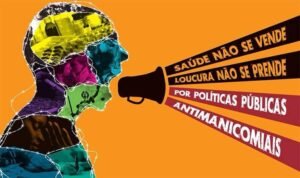
While the Global North (such as the USA and Europe) focused on the Recovery movement — aimed at individual autonomy and hope — in the Global South mental health has always been a collective struggle. Our user movements were born hand in hand with resistance against military coups, colonialism and social inequality.
Even today, we face the challenge of not just “importing” foreign models. Critics point out that the Recovery model can, at times, focus too much on individual responsibility, ignoring the racism and social injustices that sicken our people. That's why we need a science that speaks our language: Community-Based Participatory Research.
What makes research truly participatory?
According to Barbara Israel and her collaborators, this is not just a technique, but an ethical guideline. It is based on:
- Equitable Partnership: Academic researchers and community members share decision-making power at every stage, from choosing what to investigate to publishing the results.
- Ecological Model: we understand that mental health is not just “biomedical”. It is influenced by economic, cultural, historical and political factors.
- Action for Change: the ultimate objective is not just to publish, but to generate concrete and sustainable social transformation for those who experience the problem.
Science as a Tool of Resistance
Participatory research is a political act. It incorporates the experiences of “psychiatry survivors” and marginalized groups, ensuring that their voices are not only heard, but that they shape the system of care.
By adopting a decolonial context, this practice focuses on the creation of new “pedagogies of struggle”. As Achilles Mbembe highlights, the rehabilitation of our affections and passions allows us to create visceral resistance against the power that decides who should live or die. When we act collectively, we increase the community's social capital, which is one of the greatest remedies for mental health in contexts of exclusion.
Towards the New Horizon
The Entrepares project is dedicated to carrying out an in-depth review of how participatory research is happening in the field of psychosis in low and middle income countries. We want to understand how the Global South is using science to confront contemporary colonialism and build less oppressive and more democratic care.
After all, if knowledge is power, it is only fair that this power belongs to the community!
– References
- Slade, M., Amering, M., Farkas, M., Hamilton, B., O’Hagan, M., Panther, G., Perkins, R., Shepherd, G., Tse, S., & Whitley, R. (2014). Uses and abuses of recovery: Implementing recovery-oriented practices in mental health systems. World Psychiatry, 13(1), 12–20.
- Israel, B. A., Schulz, A. J., Parker, E. A., & Becker, A. B. (1998). Review of community-based research: Assessing partnership approaches to improve public health. In Annual Review of Public Health (Vol. 19).
- Arnstein, S. R. (2019). A Ladder of Citizen Participation. Journal of the American Planning Association, 85(1).
- Mbembe, A. (2018). Necropolitics. N-1 editions.

0 Comments