If you work in the SUS or the SNS of Mozambique, study public health, or want to learn practical ways to build a horizontal, anti-institutional, and truly popular science, this debate is a must-attend event!
Rede Entrepares: Brazil-Mozambique Partnership for Community Training and Research in Rio and Maputo.
If you work in the SUS or the SNS of Mozambique, study public health, or want to learn practical ways to build a horizontal, anti-institutional, and truly popular science, this debate is a must-attend event!
October 10: Mental health is democracy
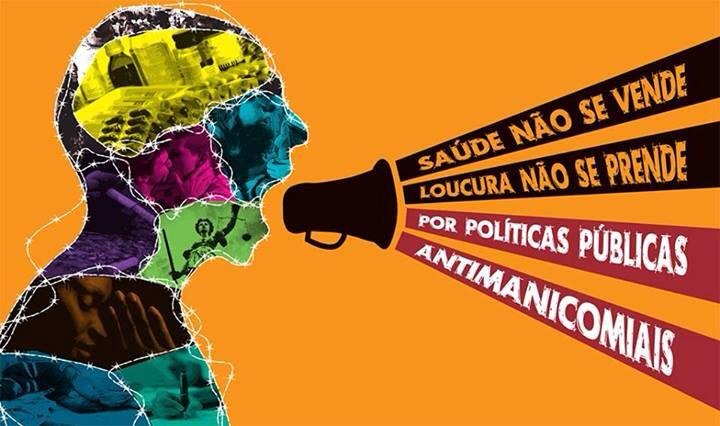
On World Mental Health Day, celebrated on October 10, it is worth remembering a simple and powerful idea: in Brazil, mental health care was built alongside democracy. The Brazilian Psychiatric Reform did not come from the doctor’s offices. It came from the streets, from the...
Work and Mental Health: Far Beyond the ID Badge, a Path to Freedom
Have you ever stopped to think that work is much more than just a way to pay the bills? For all of us, having an occupation means belonging to a group, feeling useful, and building an identity. When we talk about people with diagnoses such as schizophrenia or bipolar disorder, work takes on an even greater significance!
Care in Freedom! May 18, Anti-Asylum Day in Brazil
National Health Council, at its 378th Ordinary Meeting, received the Department of Mental Health, Alcohol and Other Drugs (DESMAD/SAES/MS). In the year 2026, the Brazilian anti-asylum movement celebrates an important legal milestone, the result of extensive mobilization that redirected the model of...
Mental health and decoloniality: for an antimanicomial struggle in Brazil.
Have you ever wondered why the Brazilian Psychiatric Reform, despite its advances, still finds it difficult to deal with the racial issue?
When the community takes control of mental health.
Have you ever felt that the solutions to your neighborhood's problems always come “from the top down”, without considering what you actually experience?
Bridge over the ocean: how popular science can transform mental health in Mozambique.
Did you know that in low- and middle-income countries, around 70% of people with schizophrenia do not receive adequate treatment?
Decolonizing the gaze: why mental health in the Global South needs a popular science
Have you ever stopped to think that the way we understand “well-being” and “mental suffering” may be loaded with a worldview that is not ours?